
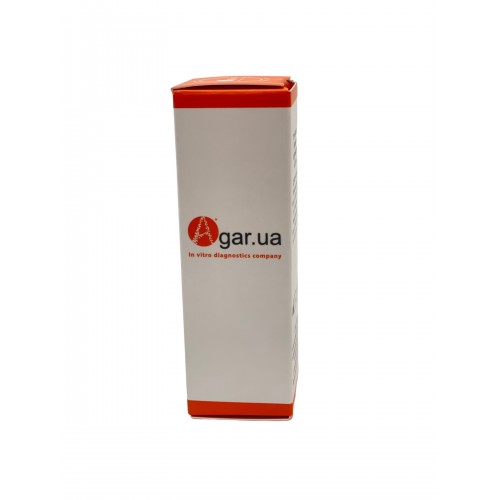
Система індикаторна паперова Agar®СІП7
(з дифтерійним антитоксином для визначення токсигенності
коринебактерій дифтерії)
ПРИЗНАЧЕННЯ
Виріб для in vitro діагностики
призначений для визначення токсигенних властивостей Corynebacterium diphtheriae
в реакції імунопреципітації.
СКЛАД
Система індикаторна паперова Agar®СІП7 антитоксин
дифтерійний – 1 флакон (20,25,30,40 дисків).
Системи індикаторні паперові (СІП)
для ідентифікації мікроорганізмів являють собою диски діаметром 6 мм з
хроматографічного паперу, що містять певні кількості реагентів.
АНАЛІЗОВАНІ ЗРАЗКИ
Дослідження проводити з чистою
культурою, після визначення приналежності до роду Corynebacterium (розсівання
на пластинчасті середовища, мікроскопія мазка, забарвленого за Леффлером).
Для роботи використовувати
культури, вирощені від 18 до 24 год при температурі 37°С на поверхні
коринебакагара або слаболужного поживного агару, що містить 10% кінської
сироватки або сироватки великої рогатої худоби або 5% гемолізованої крові.
СПОСІБ ЗАСТОСУВАННЯ
1. Чашку Петрі з середовищем
для визначення токсигенності дифтерійних мікробів підсушити при температурі
37°С від 15 до 20 хв, повернувши догори дном чашку та кришку.
2. Після закінчення зазначеного
часу на поверхню aгapу стерильним пінцетом помістити індикаторні паперові диски
з дифтерійним антитоксином. Навколо кожного диска з антитоксином сформувати
бактеріологічною петлею діаметром 2 мм 5 «бляшок» із добової агарової культури:
чергуючи 2 «бляшки» контрольного токсигенного штаму і 3 «бляшки» дослідні (з
одного аналізу з підозрілими колоніями сформувати мінімум 2 «бляшки» та
1«бляшку» із суміші від 3 до 6 однотипних колоній; матеріалом з цього аналізу
можна зайняти місця навколо іншого диска з антитоксином). Всі 5
"бляшок" слід розташувати симетрично навколо диска на відстані 0,6
або 0,7 см від краю. Діаметр кожної «бляшки» - 0,7 см. На одній чашці Петрі
можна розмістити до 4 дисків з антитоксином і, відповідно, до 20 «бляшок» з
культурами.
3. Чашки з посівами (вгору
дном) помістити в термостат та інкубувати від 24 до 48 годин при температурі
37°С.
4. Облік токсигенності слід
проводити через 18-24 годин та остаточно через 48 годин інкубації при
температурі 37°С.
5. Дослідні культури вважаються
токсигенними, якщо лінії, що утворюються, преципітації зливаються під кутом з
лініями преципітації контрольного токсигенного штаму.
Відсутність
ліній преципітації у дослідних культур через 48
год за наявності їх у контрольного токсигенного штаму вказує на відсутність
токсигенності у культур, що вивчаються.
ЗБЕРІГАННЯ
Зберігати при температурі 2-8 °С в захищеному від світла місці після кожного
використання. Термін придатності 1 рік.
СІП7 антитоксин дифтерійний
- Виробники ТОВ "НВП "АГАР ЮА"
- Модель: набор
- Наявність: Є в наявності
-
3500.00 грн